
The NASA Astronomy Picture of the Day (APOD) API website offers a gateway to the universe through breathtaking daily images and videos. Curated by NASA, each featured content piece is accompanied by a detailed description written by professional astronomers, making it both visually captivating and educational. Users can explore high-resolution images of celestial phenomena, from distant galaxies and nebulae to planetary landscapes and rare astronomical events. The website harnesses the APOD API to deliver a seamless experience for astronomy enthusiasts, educators, and developers alike, providing easy access to NASA's treasure trove of cosmic imagery.
Designed with simplicity and exploration in mind, the site allows visitors to search through APOD’s extensive archive, filter results by date, and share their favorite images. Developers can leverage the API documentation to integrate NASA's rich collection into their own projects, from educational tools to creative applications. Whether you're a stargazer seeking inspiration or a student diving into the wonders of space, the website serves as your launchpad to the cosmos, fostering curiosity and awe for the universe beyond our world.
Features
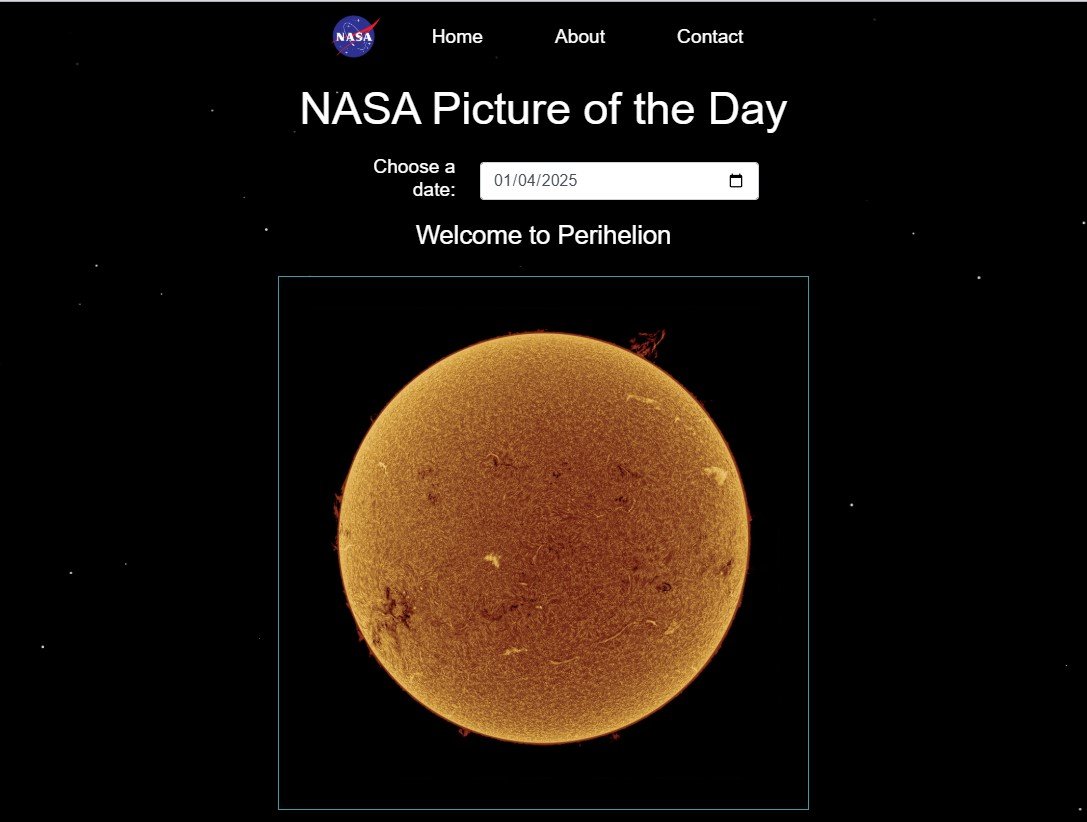
- Users can choose a specific date to view the APOD for that day, allowing exploration of the archive.
- A feature enabling users to mark and save their preferred images for easy access.
- Sections such as "The picture from Yesterday," "Random Picture of the Day," and "This Day a Year Ago" provide curated content to encourage further exploration.
- A gallery showcasing notable NASA photographs of constellations, highlighting the beauty and mystery of the universe.
- Simple, responsive layout optimized for desktop and mobile users.
Date Selection:
Favorites:
Discover More:
Award-Winning Photographs:
The animated background on my APOD website is designed to evoke the vastness and wonder of space, immersing users in a dynamic cosmic journey. Using JavaScript, I created a seamless animation of stars and particles that gently drift and twinkle, simulating the depth and motion of the universe. Integrated with HTML and CSS, the animation synchronizes with the site's layout and design elements, ensuring smooth transitions and a cohesive visual experience. By layering elements strategically, I was able to achieve a sense of depth, making the content feel like it's floating within the cosmos. This interplay between code and design provides a visually captivating experience that draws users into the website from the moment they land on it.
This animated background isn’t just about aesthetics—it’s a powerful tool for storytelling and engagement. For companies looking to showcase products, this immersive environment can serve as a stunning backdrop, framing their offerings in a context that inspires curiosity and creativity. Imagine tech companies presenting cutting-edge gadgets against a futuristic, space-themed setting, or travel agencies highlighting destinations with a celestial twist. The dynamic visuals can enhance brand messaging, making products more memorable and engaging for visitors. The blend of interactivity and aesthetic appeal demonstrates how innovative design can elevate the presentation of content and captivate diverse audiences.
Try the website
You may also like



2 Comments
Emiliano Bazza
12 December 2024 ReplyThis blog is an incredible way to connect with the beauty of the cosmos! The integration of the APOD API is seamless, and the animated background truly sets the mood for stargazing. It's inspiring to see how technology and design can come together to create such a captivating experience. Kudos on such an immersive and educational platform!
Julia Betancourt
28 December 2024 ReplyI love how this blog turns astronomy into an interactive journey. The curated features like 'This Day a Year Ago' and the ability to favorite images make it engaging, while the dynamic animated background adds a unique depth to the site. This is not just a showcase of NASA's APOD—it's a whole universe to explore. Fantastic work!
Leave a comment here
Your email address will not be published. Required fields are marked *